Prioritize Maintenance Tasks & Get Stuff Done

In this series, I’ve been sharing my tips for prioritizing maintenance tasks so you can get stuff done! Once, you probably kept a written list on your desk, or maybe a spreadsheet on your computer. I sure did. But those old methods take up a lot of time and certainly don’t help you or your team work efficiently, much less keep everyone on the same page. And that’s where CMMS software can help. What Do You Have to Gain? Let me use a very simple example from my own experience. I used to keep detailed maintenance schedules written down on paper. It was a complicated, but thorough system. But it took a lot of time to keep it updated. It took even more time to share it with my colleagues who needed to know what was going on. CMMS software freed up my time and my mind. Reminders popped up when I needed them. Continuous schedules were easy to create. And if I had questions, my maintenance data had answers—answers for questions like… How much am I spending to repair that asset? Is it more cost effective to repair or replace it? Is my team behind on scheduled tasks? Should I hire another staff member? Where is the money going? Best of all, my CMMS software created a repository of maintenance information. That means I can ask different questions in the future—ones I didn’t think about earlier. Again, getting stuff done! You Don’t Know What You Don’t Know Maintenance reporting software makes asset information, historical data, vendor information, media files, and other details easily accessible by the people who need it. (Even better, if you’ve made the move to mobile, your team can easily find this information while they’re in the field or on the shop floor.) With good data to work from, my crew could make good decisions. And I know it improved my company’s ability to compete. Maintenance software helps you stay on top of your growing to do list. Because the less time you spend making lists, the more time you can dedicate to more important things, like getting those tasks done. What’s your experience using CMMS software to prioritize maintenance tasks? Any suggestions for other maintenance managers? Leave a comment or contact us.
Maintenance Management: What You Don’t Know Will Hurt You

Here at MPulse, we often talk about how maintenance management software helps with data-driven management and how CMMS data reveals where your operations are working well… and where they aren’t. But sometimes we don’t acknowledge that doing nothing is also a choice… and it has consequences. Because in the maintenance field, what you don’t know will hurt you. It’s likely you’ve experienced this issue too. The folks in my business group work in different industries—manufacturing, technology, retail, utility, government, and more. Almost everyone had a story about a time where what they didn’t know became a big problem. Ignorance is Not Bliss A few of the stories I heard… Ignoring inventory management resulted in a problem with an employee who took company parts for personal use Not tracking key and lock use caused security issues that put people in danger Overlooking rising labor costs put the maintenance department in the red and the financial viability of the organization in jeopardy Not following a preventive maintenance plan meant a vehicle that should have lasted 10 years had to be replaced in less than five Not upgrading software caused a shutdown that cost three days of productivity for 50 workers Sloppy documentation resulted in a OSHA investigation “We used to manage based on our perceptions of what was working and what needed to change,” said Jacob, a member of my group who works for a local utility. “Everyone did. Moving towards data-driven management wasn’t simple. But when we got there, we saw how much time and money we had wasted by concentrating on the wrong things.” The Value of Maintenance Data In all the cases above, the decision not to do something (track inventory, monitor costs, schedule preventive maintenance, etc.) ended up costing the organization time and money. But they learned from their mistakes. Jacob shared his company’s four-part process for data-driven management… Measure Analyze Plan Improve Each part builds on the previous one. So, Jacob’s team takes measurements (via work orders), and then analyzes that data to understand their performance (via reports). That understanding helps them plan, and hopefully improve. That’s what maintenance software does in a nutshell. When you measure the productivity of your operations, you get a deeper understanding of your maintenance processes and how to improve them where necessary. Contact us for more information.
Train New Staff Quickly

A long-time MPulse customer, Ken, stopped by the office this week. Ken is the maintenance manager for a government agency, and he’s got an increasingly common problem. Ken needs a solution to train new staff quickly and avoid disruptions in production. “Steve, a third of our maintenance staff have retired in the past two years,” he said. “Plus, we’ve added a new parts person and project administrator. Training our new staff quickly on our CMMS has been a real challenge.”I’ve heard similar stories before, so I wasn’t surprised when Ken continued, “We’re already short staffed, and taking key personnel away from their normal work to provide system training isn’t very efficient. I need to get these new folks up to speed faster. I’m also concerned there are gaps in our training as people try to multitask.” Ken’s story is becoming more common in the maintenance profession as our aging workforce retires. It’s always tough to lose the knowledge and experience of long-time personnel. It’s also an opportunity. Ken has hired some talented people who are ready to go. But he needs to get his new team trained quickly to keep the momentum he’s achieved with his MPulse CMMS software. Ken knows the facility maintenance management system is only as powerful as the person using it. When Is It Time to Invest in More In-Depth Training? Ken’s agency invested in onsite training when his MPulse Software, Inc was first implemented several years ago. “It worked well and provided a great foundation for our success,” he said. “Worth every penny.” But with more than a third of his team in transition, Ken needs to make sure his new employees have the same chance to pick up the skills they need to keep his agency on the right path. However, like most public entities, Ken has budget restrictions. Until now, he’s relied on hands-on training with his internal MPulse users. It’s pretty cost effective on the front end as it reduces capital outlay. However, the operational cost of reduced efficiency during the training period is significant. With this many new folks, Ken needs to invest in formal training to get his new team working at the same level of production. I asked Ken about his goals for training. He listed off six things he wanted his employees to learn… Benefits of CMMS software Software features and capabilities New skills New methods for old skills Safety documentation Regulatory compliance record keeping Pick the Right Training Option for Your Team Ken has several expert training options within his budget. Recorded video training is inexpensive and easy for employees who have complicated or conflicting schedules. Instructor-led webinars offer a combination of online and classroom training that provides a chance to customize the content without requiring travel. Instructor-led classroom training works well when presenting a lot of information to groups of employees in an environment that is free from other distractions. Onsite training provides personal, customized face-to-face training in your work environment. After going through his options, Ken decided on classroom training. “Everyone will get the same information at the same time,” he said. “Plus our shop is busy. Fewer distractions will help the team concentrate.” A successful maintenance management program requires more than just great software. You need well-trained people who know how to use it, and you need a solution set up right to work with your company’s asset and business processes. Ken found a good solution that works for his organization. But he’s not done yet. I’ll continue with Ken’s story next time. What’s your experience with training new employees? What’s worked? What hasn’t? Leave a comment or contact us.
Customize Your Maintenance Software

The ability to customize your maintenance software ensures that it aligns perfectly with your unique operational needs, enhancing efficiency and flexibility in managing maintenance tasks. Customization means different things to different people. Here at MPulse, we offer an advanced customization feature so you can modify your CMMS software in a way that matches your organization’s needs. Typically, our customers are interested in customization because they want to change or add layouts, fields, nested fields, and custom prompts. So, we designed our maintenance software to make these types of changes on the fly with just a few clicks. The Right Information Where You Want It The advanced customization feature of MPulse was a big plus for Amanda. When her state government organization first implemented CMMS software, she needed to modify certain things, such as field names and the work order layout, to make sure the techs could find pertinent information right where they thought it should be. “It sounds like a minor detail,” Amanda explained. “But those little things made a big difference to our users. It also made the implementation process easier because our new CMMS work orders looked very similar to our old paper work orders, so the technicians had an easier transition.” Customize Your Maintenance Software When Circumstances Change It’s very common for organizations to use special codes to track internal data, so the MPulse advanced customization feature includes the ability to easily create new tabs and fields. It’s a feature that comes in handy long after CMMS implementation. Even today, long after their first maintenance software purchase, Amanda continues to tweak her MPulse database—adding information as necessary. “We often get requests to track different data from upper administrators,” she explained. “We’ve added fields for internal accounting codes, warranty information, employee time, and more. It helps us stay flexible.” That flexibility has helped Amanda’s organization during several big changes. “We’ve had a lot of changes in management, and different people want different information,” she said. “The ability to customize our MPulse CMMS software meant these types of changes were a lot easier for everyone.” Faster Implementation and More Accurate Data The ability to customize your maintenance software when circumstances change also makes implementation faster with less resistance from users. “Our maintenance team is the key to collecting CMMS data, so it’s important they record accurate information,” Amanda said. “If your data isn’t accurate, neither are your reports. And in our organization, accuracy is a part of our greater goal—to spend taxpayer money wisely.” Every organization has its own unique processes and requirements, which is why advanced customization is key to getting the most out of your maintenance management software. With MPulse CMMS software, you can tailor features to fit your specific workflows, making maintenance operations more efficient and aligned with your business needs. Whether it’s adjusting dashboards, automating reports, or configuring asset tracking, the advanced customization options help you streamline tasks and improve productivity. Want to see how MPulse can be customized for your organization? Contact us today to learn more.
Simple Ways to Improve Your Maintenance Operations: User Interface
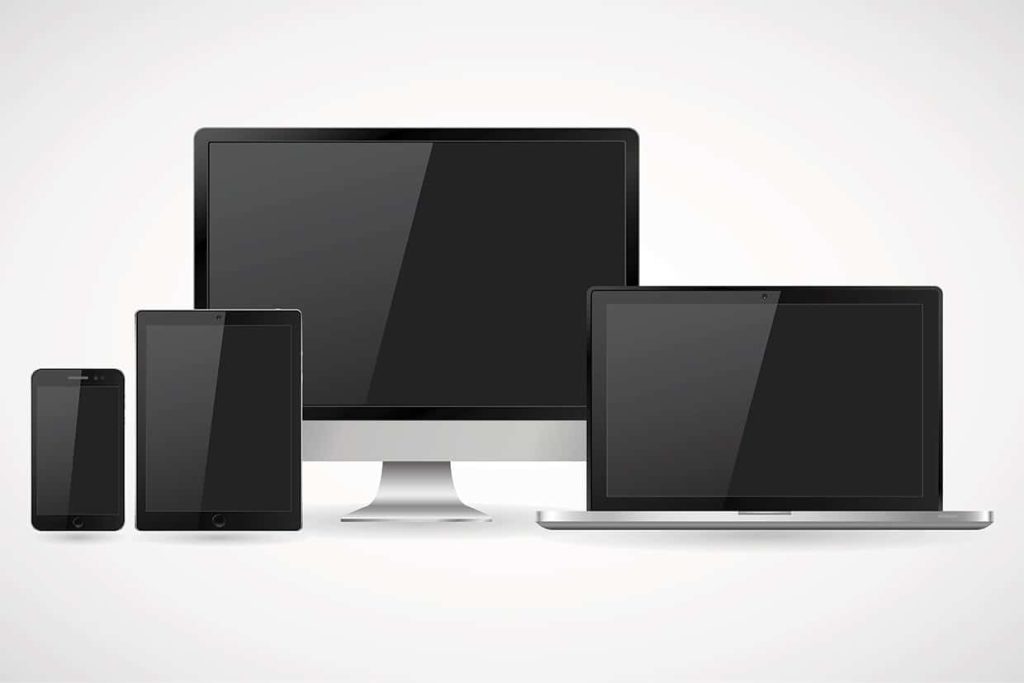
A well-designed CMMS user interface enhances usability and efficiency by providing intuitive navigation and streamlined access to maintenance management tools. What’s the CMMS User Interface? Just as the term implies, the user interface is the way the user (i.e., your maintenance tech) interacts with software (i.e., the computer or device). When CMMS software has a good user interface, you feel it. The strongest user interfaces makes using the software more intuitive and seamless. And a good user interface makes the difference between software that’s used… and software that’s not. How Does the User Interface Affect My Maintenance Team? User interfaces affect our lives in ways we don’t always understand. Have you ever tried to heat up food in an unfamiliar microwave? Or recorded a TV show on a different DVR with a different service provider? You have, and you probably didn’t think twice about it. Because the user interface was familiar enough that you could figure out what to do. Have you ever searched for a button or command in Word or Excel? Ever notice how Ctrl-S means Save in every computer program? Or how the File menu is always in the same place? Those little details make it easier to find things in a software program you’ve never used before. Why Do I Need an Adaptive User Interface? Back in the day, software developers designed the user interface for a desktop monitor—because that was the only place to use software. Today’s user interface is more complicated, thanks to mobile technology. Today’s maintenance managers need software that works on monitors, tablets, and smartphones—because it’s likely your maintenance is using more than one device (or you will be soon). At MPulse, we call this concept Adaptive “Any Device” Interface. That term means what it says—our CMMS software will work the same way across multiple devices. How Does the User Interface Help? When your CMMS software has an intuitive, adaptive interface, your maintenance team experiences some big benefits… Training will be faster and easier because your maintenance techs will already know the basics. You are more likely to experience a smooth software implementation with less help from expensive, outside consultants. Once it’s up and running, your team will be able to complete tasks faster because it’s easy to use. Your team is more likely to voluntarily keep using the software because it’s seamless and makes their work less complicated. For such an important component, the user interface gets very little thought from the actual users. That’s by design. A good user interface is instinctive, so you don’t need to think about it. Good user interface simply improves maintenance operations without trying. Have you ever struggled to learn new software because it just didn’t feel intuitive? With MPulse, that frustration becomes a thing of the past. Our user-friendly interface is designed to make learning and navigating maintenance management tools easier than ever, ensuring your team can quickly adapt and stay productive. Ready to simplify your software experience? Contact us today to learn how MPulse can transform your maintenance management process. Or give MPulse a try with our free software trial.
3 Simple Ways to Improve Your Maintenance Operations

Sometimes it’s the little things that make the biggest difference. I was reminded of this notion recently during coffee with a long-time friend and customer, Carl. Carl and I are old enough to remember a time before barcode scanning was as prevalent as it is today. I helped him install a barcode system back in the early 1980s. 1. Mobile Barcode Scanning Carl, the general manager of a local store for a national chain, was ahead of his time. He understood that information was his most important asset. Believe it or not, barcodes were relatively new back then. Carl saw the potential, so he invested in a barcode system to help his employees manage inventory. Simplifying Data Entry Carl’s operation stocked thousands of items, and they reordered constantly from multiple suppliers. Keeping track of that information was mind-boggling, and staff members would often go looking for an item only to discover it wasn’t there. The organization’s annual inventory count was a serious undertaking, with a dozen employees or more writing down numbers while Carl and his assistant typed in information on a spreadsheet from handwritten notes. The barcode system allowed them to automate the process. The time it took to physically do the inventory was cut by a third. The time it took to enter data and create the reports took minutes instead of days. And Carl’s employees knew what needed to be ordered when, streamlining the purchasing and receiving process. Carl’s corporate offices were so impressed, they ended up implementing a nation-wide system that closely resembled what Carl set up. “At the time, it felt like a huge undertaking,” he said. “But looking back, it was a relatively simple change that helped the company grow.” What’s Old is New Again Today, what Carl accomplished is simpler than ever because… Technology is cheaper Barcode label printing is widely available 2D barcodes (like QR codes) can store and track even more data Data is easily synced with CMMS software When we implemented Carl’s system, barcode scanners required wired connections. Downloading the data meant plugging in the device to the computer. Today barcode scanners easily transmit data wirelessly. What’s more, modern maintenance software includes mobile device barcode scanning capability so maintenance personnel can use a smartphone, tablet, or barcode scanner to input data into any CMMS field. Carl is still looking for ways to make his team’s workflows more efficient. He listed off a bunch of things he can track today with barcode technology—from tracking employee time to managing the check in/check out process of tools, keys, and vehicles. 2. The User Interface This time I’ll talk about one that you probably rarely—if ever—think about. Yet it is a key part of your maintenance management software. It’s the user interface. What’s the User Interface? Just as the term implies, the user interface is the way the user (i.e., your maintenance tech) interacts with software (i.e., the computer or device). When CMMS software has a good user interface, you feel it. The strongest user interfaces make using the software more intuitive and seamless. And a good user interface makes the difference between software that’s used… and software that’s not. How Does the User Interface Affect My Maintenance Team? User interfaces affect our lives in ways we don’t always understand. Have you ever tried to heat up food in an unfamiliar microwave? Or recorded a TV show on a different DVR with a different service provider? You have, and you probably didn’t think twice about it. Because the user interface was familiar enough that you could figure out what to do. Have you ever searched for a button or command in Word or Excel? Ever notice how Ctrl-S means Save in every computer program? Or how the File menu is always in the same place? Those little details make it easier to find things in a software program you’ve never used before. Why Do I Need an Adaptive User Interface? Back in the day, software developers designed the user interface for a desktop monitor—because that was the only place to use software. Today’s user interface is more complicated, thanks to mobile technology. Today’s maintenance managers need software that works on monitors, tablets, and smartphones—because it’s likely your maintenance is using more than one device (or you will be soon). At MPulse, we call this concept Adaptive “Any Device” Interface. That term means what it says—our CMMS software will work the same way across multiple devices. How Does the User Interface Help? When your CMMS software has an intuitive, adaptive interface, your maintenance team experiences some big benefits… Training will be faster and easier because your maintenance techs will already know the basics. You are more likely to experience a smooth software implementation with less help from expensive, outside consultants. Once it’s up and running, your team will be able to complete tasks faster because it’s easy to use. Your team is more likely to voluntarily keep using the software because it’s seamless and makes their work less complicated. For such an important component, the user interface gets very little thought from the actual users. That’s by design. A good user interface is instinctive, so you don’t need to think about it. 3. CMMS Customization Customization means different things to different people. Here at MPulse, we offer an advanced customization feature so you can modify your CMMS software in a way that matches your organization’s needs. Typically, our customers are interested in customization because they want to change or add layouts, fields, nested fields, and custom prompts. So we designed our maintenance software to make these types of changes on the fly with just a few clicks. The Right Information Where You Want It The advanced customization feature of MPulse was a big plus for Amanda. When her state government organization first implemented CMMS software, she needed to modify certain things, such as field names and the work order layout, to make sure the techs could find pertinent information right where they thought it should be. “It sounds like a minor
Inventory Control Management | Trending Topic

Last time, I shared a story from Cathy, an MPulse customer whose organization continues to improve its maintenance strategy based on hard data from their MPulse Software, Inc. We’ve talk about the surprises her company found after it first implemented CMMS software and the discovery that inventory control is a key part of their larger goal—controlling the cost of maintenance. In this post, Cathy tells us how MPulse CMMS software eased the process of inventory counts and, as a part of that process, the ability to identify surplus parts. Identifying Surplus Parts Like many organizations, Cathy’s company was storing surplus parts—parts the company has not used in a given period of time. Those parts were just sitting on the shelves, forgotten, but still costing the organization money. Cathy’s team knew they were storing unneeded parts. But it was an easy thing to ignore… until Cathy reviewed their MPulse CMMS data and saw the numbers on the report. [related-content] “Once we identified how much of our inventory was either overstocked or outdated, we knew we were missing an opportunity to save some cold, hard cash,” Cathy said. It wasn’t easy. “It was a bigger job than any of us first realized,” she continued. “But eventually we all benefited from the extra room in the storage area and reductions in manpower to count them. In addition, it freed up capital to use for parts we actually needed.” Cyclical Inventory Counts Cathy’s company began thinking about inventory differently. For example, Cathy’s company used to do an annual inventory for tax and financial accounting purposes. But Cathy found a different way that worked better. Now the organization does cyclical inventory counts, where her team inventories 1/12 of the stockroom on a monthly basis. That new procedure, coupled with the removal of the surplus parts, cut down the time the team spent on counting inventory by 20 percent. Cathy’s company is a great example of how organizations can use CMMS data to improve their maintenance strategy. You might be shaking your head right now. That’s because you and I both know that one of the most frustrating issues in maintenance is inventory control. But like Cathy’s company, inventory control can help you find real savings for your organization. As I’ve said before, it’s important not to ignore it. How does your organization control inventory? What’s been your experience? Leave a comment or contact me.
Do You Know What’s Sitting on Your Stockroom’s Shelves?

While I’ve long advocated for the benefits of inventory control, it’s not a simple topic for maintenance managers. I’ve seen systems where techs just order parts on an as-needed basis, and I’ve helped companies develop sophisticated inventory control systems using CMMS inventory control software. Wherever your organization falls on this spectrum, it’s likely you can benefit from the inventory control features within your CMMS software. And the benefits might surprise you. Remember Cathy, whose company began asking different questions about their maintenance strategy after implementing MPulse Software, Inc? Those questions led her company to implement advanced inventory control features, and the results were very interesting. “When we decided to improve our parts tracking, we needed five things from our MPulse CMMS software,” Cathy said. These were… Purchase price and date Vendor information Physical location Past usage rates (to calculate appropriate stock levels and reorder points) Notifications when parts or inventory levels fall below minimum stock levels Inventory Turnover Once the new stockroom inventory software system was set up, Cathy’s managers first looked at inventory turnover—a measure of the number of times inventory is sold or used in a time period, such as a year. “In our industry, our goal is an annual inventory turnover of 3 or 4,” Cathy explained. “But when we looked at our CMMS data, we saw our inventory turnover rate was just under 1. That’s not good.” Cathy’s organization was spending a lot of money storing and managing parts they didn’t need. That means they were wasting money spent on… Increased square footage to store parts Unused or underused parts Inventory carrying costs Staff time to manage parts Staff time to perform annual or cyclical inventory audits Lack of correct parts on hand for staff when they are needed Inventory Lead Times To tackle this problem, Cathy was tasked with improving the inventory turnover rate. She used MPulse stockroom inventory software to help employees manage the inventory based on need, availability, and order time. “We have some critical assets that need parts with a long lead time. They come from Europe, and sometimes it takes several weeks to get them,” Cathy explained. “With MPulse, we adjusted our stocking levels by calculating average usage rates by the part’s lead time in days. It helped prevent both having too many and not enough of key items.” Inventory turnover and lead times just two of the important parts of inventory control. Next time, we’ll discuss other inventory control issues that Cathy’s company found. How does your organization manage stockroom inventory? What would you like to do better? Leave a comment or contact me.
Does Your Preventive Maintenance Plan Cost Too Much?

Maintenance managers know that the backbone of any maintenance program is a preventive maintenance plan. Generally, we assume that preventive maintenance is a good thing and it will prevent downtime. But there are certain circumstances where it’s more complicated. That’s what MPulse customer Angie discovered. As a team supervisor for a government agency, Angie re-examined her team’s maintenance strategy after she reviewed her organization’s CMMS data. Angie’s department maintains radio equipment, which can be located in remote areas that are physically challenging to access. In Angie’s case, mountainous terrain made it particularly difficult. Historically her radio technicians would schedule preventive maintenance twice a year (in spring and autumn) when the weather made access easier. After reviewing work order data and equipment readings in her MPulse Software, Inc, Angie wondered if it was more efficient to only do those tasks once a year by using remote site monitoring technology. The Value of CMMS Data for Preventive Maintenance Angie knew she needed more than just a hunch when she proposed her idea to her department head. She did some research and tested her theory. “Most of our assets in these locations are classified as critical equipment,” she said. “It wasn’t enough to tell my managers that I thought this would work. I had to prove it. Equipment failure was a serious concern.” Her tests showed that with a few tweaks to their preventive maintenance plan, the technicians could reduce their remote area visits to once a year. That change would reduce the preventive maintenance tasks for those assets by half, which would save… Parts and material costs Labor costs Transportation costs Environmental impact Plus, those funds could be reallocated to other areas. Data-Driven Maintenance Management Although Angie’s plan seems like a no-brainer, not everyone was on board at first. “I ran into some resistance—the ‘we’ve always done it this way’ attitude,” she said. But with MPulse, she could track failure rates and equipment measurements. Historical data backed up her theory. “I eventually convinced them to allow a 1-year trial,” she said. “Without that data, it would have been more challenging.” The result? Angie’s department has experienced no additional emergency shutdowns since the change three years ago. Advantages of Condition-Based Maintenance Time-based preventive maintenance programs are a standard in our field. But condition-based maintenance can reveal different—and sometimes better—ways to do things. Angie’s team plans to expand on her idea. “We’ll use MPulse’s Condition-Based Maintenance feature to keep tabs on our critical assets by recording temperatures and other performance indicators,” she said. “That’ll make it easier to identify problems before they happen. And preventing outages is always a good thing in this profession.” Interestingly, Angie’s managers are more receptive this time. She credits the success of her first proposal as the reason her other ideas have gained support faster. Is it time to re-examine your preventive maintenance plan? Learn more about how MPulse CMMS software and condition-based maintenance can help.
The Maintenance Management Task You Need to Add to Your “To Do” List

Last week I attended a retirement party for two employees of an MPulse customer. After offering my congratulations (and admitting a little envy), I stopped to talk to Judy, who oversees the maintenance staff. Our conversation left me with the maintenance management task that every maintenance manager must add to their to do list. Judy looked a little melancholy for someone surrounded by that much cake. When I asked her why, she said: “Steve, there’s 62 years of experience walking out the door today. It’s going to be hard to replace that kind of expertise.” Her comment struck a chord. There’s a lot of inherent knowledge in maintenance, and I bet your maintenance workers carry a lot of information in their heads. When they walk out the door, that experience goes with them. Everyone moves on at some point, and I don’t have to tell you that finding good maintenance employees is challenging. That’s why you need a succession plan. How to Create a Maintenance Succession Plan Now, it’s likely your organization doesn’t have a formal program for succession planning. Not that many do. But don’t let that hold you back. It’s in your best interest to create a plan now that will make your life easier during staff transitions. There’s tons of information about creating succession plans out there, but I want to focus on two of the most important things in the maintenance department—skills and experience. I asked Judy about her organization’s succession plan for maintenance employees. “We don’t have a formal process,” she said. “But I know it’s a problem. So I’ve focused on capturing information and documenting procedures in our CMMS software that can be easily passed down from person to person.” I think that’s a great start. Judy is creating a historical record that stays with the company long after the tasks are done and the employees have moved on. But there’s more to it. Experience matters, so it’s important newer employees get hands-on training too. I recommend a four-step process: Identify the skills—including specialized ones—needed to perform maintenance duties. Document any related procedures, resources, or training information in your CMMS software. Create a plan to get employees the experience and training needed to develop those skills. Put that plan into action. Why You Need a Maintenance Succession Plan I know maintenance managers are busy, and succession planning may sound like just another thing to do. But think about the payoff. Maintenance employees are responsible for… Preventing equipment failures Reducing maintenance costs Documenting regulatory compliance Maintaining a safe work environment Extending asset life cycles. In other words, not taking action is simply too expensive. We don’t talk about succession planning much in our field. But we should. Our aging workforce coupled with the increasing responsibilities of the maintenance team means the right person for the right job makes all the difference. Have questions on how to plan for employee transitions? Contact us.